Skip to content

Polo 6C: 1.2 TSI Cold weather, engine runing rough

Featured Replies

Hey fox, hops you doing well,

It's been a while now (3 years), I looking for an issue which is only present during winter.

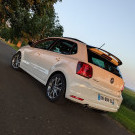
PXL_20230228_145825557.jpg


When cold, I let it perform it's cold start + 1/2 minutes of running at idle.
On flat surface, everything is fine but one on false flats or hills, with the same accelerator pedals positions, engine is giving some light jerks between 1500-2000 rpm.

Like the engine is hesitating or somewhat.

Here is the list I've done:

-ECU update to VW dealership to the latest version

-Spark plug

-Coil pack (Official from VW)

-Carbon intake cleaning

-Both Pressure/temp sensor on the intake (Official from VW)

-Throttle body cleaned

-Fuel filter

-Hall sensed replaced (Official from VW)

-Camshaft control valve

I did a lot log on VCDS but nothing suspected on the curves.

I also took compression cold and warm engine: they are in the limits according to the VW Workshop manual (14 bars on each cylinder).

So it's not an engine issue, so far.

I'm thinking of a bad input or a component that doesn't like cold temp. Because lower the temp are, worse is the issue.

Coolant temp sensor, intake temp sensor are giving the same value as the ext temp sensor so they are good.

On my different log with the VCDS, I cross check the value asked by the ECU for high fuel pressure and boost pressure.

All values reach the demand of ECU so I'm a little bit lost.

For no reason, I suspect an issue with the fuel system (fuel tank pump). I could provide me the good pressure but the not the flow required.

But at the same time, no faults code and the HIGH pressure fuel pump is delivering the right pressure each time.

  • Replies 10
  • Views 2.3k
  • Created
  • Last Reply

Top Posters In This Topic

Posted Images

I suppose the 1.2 TSI does not have the Supercharger of the 1.4 TFSI, to provide charged, warmer air, only the Turbocharger and I doubt that's spinning much below 2000rpm, but it might be just beginning to build boost, so I'd investigate its actuator that closes the waste gate.

Just a theory, but then I found this

https://www.volkswagenforum.co.uk/threads/polo-1-2-tsi-engine-hesitation.42377/

Bottom of that thread has someone with similar symptoms and mistimed exhaust cam. No sensor on that.

But it's a timing chain I think... so hard to get wrong. Maybe stretched?

But why only cold weather? I suppose cold air is denser so engine ECU in warm up phase is balancing slightly richer fuel air mixture to heat the catalyst (and also advancing ignition timing so cold idle is 1100 then down to 700 ish), but boost moves slightly out of the expected ECU parameters if the actuator operates jerkily, rather than steadily, letting a tube of cold air in.

Guess.

What does the oil temp read at when it is jerky?

I assume that's available on the multifunction display as well as l/100km or mpg.

  • Author

Sorry for the late answer, I didnt received any notification.

Be carefull, this engine is brand new one compared to old 1.4 TSI and 1.2 TSI with chain.

Those EA211 (1.0/1.2/1.4/1.5/ and 1.5 EVO) are equiped with belt.

Only cold weather with temp from 3°C to minus....Coolder it is, the worse is it.

I have a friend wich have the same car, no issue at all.

My parents have the same engine (1.4 TSI 11kw) and even dead cold at -5°C it was dead smooth. Like butter.

Mine, nop.

Concerning the wastegate actuator, you are quite right it's a weak point on this engine.

But no fault and boot reach the ECU request, even when the engine is cold and when the issue is here (I did some long on VCDS).

Since I'm focusing/suspecting fuel issue, I did a comparison with my parent's car.
A Skoda Octavia of 2015 equiped with an EA211 CZDA engine (1.4 TSI 110KW).
Mine is a EA211 CJZC engine (1.2 TSI 66KW) but the architecture is the same.

Here is the graph of the high fuel pressure of the Skoda.
It was used few hours ago and some pressure was still inside the high pressure fuel rail:

*I just forgot to include RPM on the first*
Group-036-Field-0-Group-042-Field-0-Group-086-Field-0.png

Here with RPM
Group-004-Field-0-Group-036-Field-0-Group-042-Field-0-Group-086-Field-0.png

When can notice since the moment engine is switch OFF, fuel pressure remain stable and even increase in the fuel rail due to the heat generated by the engine and by the fact, injector/fuel pump are fueltight.

And here, the graph of my Polo.
Car was used until midnight and the test was performed 14-15h later.
Notice how low the fuel pressure in the rail is low.

Group-004-Field-0-Group-033-Field-0-Group-039-Field-0.png

Engine was cold so I let it stabilize during 2 minutes.
Then I switch off the engine.

And immediately, high fuel pressure drop like skyrocket.
What I do not understanf/missing is the fact that the "High pressure fuel request" is also dropping and if there is a link between the two (request and actual pressure mesured in the rail).

On the Skoda it stays at 140 bar, factory value for idle (on mine it's 120 bar).

Thanks for clarifying.

You might be onto something...

where could the pressurized fuel go?

leaky injector?

Fuel pressure regulator.. is it controlled by electronics or vacuum?

  • Author

I check injector today for leaking and no issue with the VW troubleshooting manual.

Fuel pressure regulator in on the high pressure pump (it's N276) and can be faulty but I have no option to test it.

There is also a pressure sensor installer on the high pressure rail.

  • 11 months later...

Hello for everyone! Any news on this one? I´ve been trying to resolve a similar problem this fall/winter, my 2015 1.2 110 Polo (belt driven) has a weird issue.

The issue is not appearing when the engine is completely cold. With a slightly cold engine (oil under 70c), the engine hesitates with very light throttle and rpm between 1700-2200 (so especially in city surroundings). 70c oil and water in the normal, the problem disappears.

In december, we cleaned the intake ports which were quite dirty for 48000miles on the odo. After that, i´ve changed the coils on cylinders 3 and 4, as in the early fall before carbon buildup cleaning, they showed misfires. This did not seem to make a difference. Spark plugs were replaced even before anything else.

No fault codes after carbon cleaning, no codes before coil replacement, and no fault codes now after that.

Issue still persists. I like the car so it would be huge to get this nuisance solved.

Edited by Jukka

I wonder if the throttle flap position -which must be nearly closed- is not reported accurately to the ECU so the small movement to slightly wider (where an old carb would manually squirt some fuel through the pump jet) is not registered as sufficient to enrich by lengthening injector pulses

(but not bad enough to trigger EPC light since engine cold).

Perhaps a throttle position sensor relearn procedure would help. It can't be harmful.

Allegedly ignition on but don't start or touch gas pedal for 3 minutes will realign.

Edited by dvderlm

13 hours ago, dvderlm said:

I wonder if the throttle flap position -which must be nearly closed- is not reported accurately to the ECU so the small movement to slightly wider (where an old carb would manually squirt some fuel through the pump jet) is not registered as sufficient to enrich by lengthening injector pulses

(but not bad enough to trigger EPC light since engine cold).

Perhaps a throttle position sensor relearn procedure would help. It can't be harmful.

Allegedly ignition on but don't start or touch gas pedal for 3 minutes will realign.

Not a bad theory, must be worth a try.

Create an account or sign in to comment

Recently Browsing 0

  • No registered users viewing this page.

Account

Navigation

Search

Search

Configure browser push notifications

Chrome (Android)
  1. Tap the lock icon next to the address bar.
  2. Tap Permissions → Notifications.
  3. Adjust your preference.
Chrome (Desktop)
  1. Click the padlock icon in the address bar.
  2. Select Site settings.
  3. Find Notifications and adjust your preference.